Fine dust printer: how dangerous is it?

We care about clean air

solutions for indoor air quality

Quick to: advice and product

Fine dust printer: how dangerous is it?

Printers emit fine dust. Did you know? How big is the chance of getting sick from being close to this so-called “fine dust printer”? In the office you know better than anyone how important printers are. Just to print a manual, or an invoice … you know what it’s like.

The fine dust printer causes respiratory problems and respiratory complaints in people. In this blog, we answer all questions related to the health and use of printers in the workplace. For example, is a printer harmful in the workplace? And to what extent are employees bothered by printers in their work environment? Read on and learn more about the “fine dust printer”.

What kind of substances does a printer emit?

Not everyone is aware that printers emit various substances in addition to paper. However, it differs per printer, because it depends on a number of factors such as the type of paper, the type of ink, the toners and cartridges. The various particles and gases that are released during printing are shown below.

Particles:

  • Fine dust
  • Ultrafine dust
  • Paper dust

Gasses:

  • Ozone
  • Toner powder
  • Nitrogen dioxide

What kind of printers emit fine dust?

There are two types of printers on the market: the laser printer (a fine dust printer) and the inkjet printer (a printer without fine dust). Laser printers and copiers use toners. Toners emit harmful dust particles through combustion processes. An inkjet printer, on the other hand, uses liquid ink and does not emit fine dust.

Unfortunately, almost all offices use laser printers. These fine dust printers are mostly chosen over inkjet printers, because they last longer and are cheaper to buy and maintain.

How harmful are printers to people in the workplace?

There are employees who are exposed to high concentrations of printer fine dust for a long time. These people belong to the so-called risk group. The people in this risk-group who are vulnerable are, for example, people who carry out maintenance on printers. But also employees who work close to a fine dust printer, especially if the printer is used intensively.

A fine dust printer increases the risk of an allergic reaction, which will cause watery eyes, skin problems and irritated airways. These symptoms are referred to by the Working Conditions Act by the term toner disease.

What does the legislation say about printers in workspaces?

Printers and copiers that produce more than 5000 copies a month should be placed in a separate area with adequate ventilation. More than 50,000 prints per month require placement in a reproduction room with good dust extraction.

Does an air purifier help against printer fine dust?

One way to protect yourself and your colleagues against fine dust from printers is to place the devices in a separate, well-ventilated area. The disadvantage, however, is that many offices do not have an extra or separate space to move the printers.

If it’s not possible to move the existing printers, what can you do? The answer to that is the use of a powerful air purifier! A purifier, also called a printer filter, not only removes all present fine dust particles from the air, it also improves the air quality, making office employees more productive.

Studies have also shown that employees report sick less at work when the air quality is good. The best printer filter for offices against fine dust nuisance is the EDC650 (has a fine dust filter effectiveness of more than 99%).

Need advice or more information?

View our product page with air purifiers or read more about the air purifier in our extensive advice. Do you have any further questions or would you like some free personal advice? Call +31 20 6464028 or go directly to our range of air purifiers:

    Contact with AXP


    Fine dust in the office is harmful to employees

    We care about clean air

    solutions for indoor air quality

    Quick to: product

    Fine dust in the office, how harmful is it to employees?

    Research has shown that an average of 2000 ultrafine particles are swirling around per cm3 in every clean office. Every employee of a company has to deal with it: fine dust in the office. Should employees be concerned about this? Unfortunately yes. Fine dust in the workplace is bad for your health. People also get sick from long term exposure to high concentrations of fine dust. It’s therefore no surprise that fine dust contributes to 4 percent of the entire burden of disease in the Netherlands. It’s time that entrepreneurs started to take these harmful substances seriously in the office.

    Fine dust sources in the office

    It’s useful to know where fine dust is formed in the office, so we can tackle the problem at the source. Machines, in general, are the biggest culprits in a workplace. Think of printers and computers. Printers in particular contribute a lot to the poor air quality at work. Is your office located next to a busy road or in a big city? There is a good chance that, without knowing it, you are working in an environment with a lot of (ultra) fine dust.

    Health complaints due to fine dust at work

    People who work in an environment full of fine dust often have to deal with the following symptoms: respiratory complaints, skin complaints, skin irritations and headaches. Fine dust in the office is also a known cause of allergic reactions. Such as, for example, skin complaints and asthma attacks. So people with allergies and respiratory diseases.. Be warned! Especially when working in a big city or on a busy road.

    Measuring air quality at the workplace

    Do you lack insight into the air quality in the office? In that case a professional measurement will offer a solution. Measuring fine dust in the office is a good indicator of general air quality. Fine dust can be measured in two ways: by an external party or by a measuring device. We recommend a fine dust meter. This price-friendly device accurately indicates the amount of fine dust in a room. The device is also portable so that it can be taken anywhere and used.

    Remove fine dust from the office

    Fortunately, fine dust in an office space can be prevented in a quick and easy way. With a good air purifier you filter and remove all harmful dust particles from the air, including ultra-fine dust. Our air purifiers work with a patented AIH filter technology. With this technique, the filter effectiveness is 99.98%. The EA30 air purifier is ideal for offices. This model is super quiet, has a low energy consumption and a high filter capacity.

    The EA30 is perfect for solving fine dust problems in the office

    Benefits of clean air in the workplace

    Using a good air purifier keeps your office clean and fresh. This has a positive effect on productivity, image and absenteeism. In addition, it reduces concentration problems, fatigue and nose complaints. A healthy workplace not only ensures that your workplace is clean, but also that your employees perform their daily tasks in a fit and satisfied way.

    Need advice or more information?

    Take a look at our product page with air purifiers or read more about the air purifier in our extensive advice. Do you have any further questions or would you like some free personal advice? Call +31 20 6464028 or go directly to our range of air purifiers:

      Contact with AXP


      Fine dust at home? How dangerous is it and what can you do about it?

      We care about clean air

      solutions for indoor air quality

      Fine dust at home, is it dangerous and how do you get rid of it?

      A high concentration of fine dust in the house can often be prevented and it can also be taken out of the air when it is already there. How can you reduce the level of fine dust in your home? And from what concentration is it harmful? We are happy to tell you more about it.

      In the Netherlands, 1 in 7 houses suffer from a fine dust concentration that is too high. This has emerged from research by the Dutch Lung Fund (Longfonds). Fine dust may not be visible to the naked eye, but it‘s harmful. Protecting your home against these dust particles is therefore very important.

      Where does fine dust come from?

      ‘Almost 80% of the amount of fine dust in the air is the result of human actions.’ is what the RIVM says. The presence of fine dust in the house is mainly due to combustion processes. Think of heating a wood stove, fireplace or pallet stove. The air that arises during cooking and frying is also an important source of fine dust. Especially when roasting meat and stir-frying vegetables. Finally, smoking cigarettes and burning candles at home also causes fine dust problems.

      How much fine dust at home is harmful to your health?

      The more fine dust is present in the air, the worse the health problems are. In the Netherlands, fine dust is responsible for about 4 percent of the entire burden of disease in the Netherlands. Well-known health complaints caused by fine dust include a reduction in lung condition, worsening of lung complaints (wheezing, coughing and shortness of breath) and inflammation in the lungs. People who are particularly at risk of these symptoms are:

      • People with asthma or other lung diseases (read more about air purifiers for asthma)
      • People with cardiovascular disease
      • Elderly
      • Children

      Is it possible to prevent fine dust at home?

      The fine dust in your house is created automatically in many daily tasks, for example, by roasting a tasty piece of meat. This is why you can never completely remove fine dust in your home. What you can do is limit the sources of fine dust as much as possible. For example, by making your home smoke-free. Do you have a fireplace, pellet stove or wood stove? Then it is wise not to use it that often. Finally, always turn on the extractor hood when you cook or invest in a good extractor hood. This way you can be sure that you limit the fine dust emissions during cooking.

      How do you get fine dust out of your house?

      You naturally want to reduce fine dust if you find it in your house. An air purifier offers a solution. This unit has the task of extracting polluted air from the air present. An air purifier has the ability to remove fine dust in a quick and effective way from your home. The air purifier EA15, for example, has a fine dust filter effectiveness of 99.98%. In short, an air purifier is an excellent investment if you want to remove fine dust from your home.

      Need advice or more information?

      By measuring fine dust in your home, you gain insight into the air quality of your environment. You also determine the effectiveness of your air purifier. Take a look at our product page about the fine dust meter or read more about the fine dust meter in our extensive advice. Do you have any further questions or would you like some free personal advice? Call +31 20 6464028 or go directly to our range of fine dust meters:

        Contact with AXP


        Air purifier for in the bedroom, why should you?

        We care about clean air

        solutions for indoor air quality

        Quick to: Product

        Best air purifier for your bedroom, what should you pay attention to?

        An air purifier in your bedroom purifies the indoor air so that you breathe clean air when you are in bed. It removes fine dust, pollen, bacteria, viruses and fungi. Read more about what you should pay attention to when buying an air purifier for your bedroom and what the best buy is for you in particular.

        The requirements: silent air purifier with low energy consumption

        Most people prefer to sleep in a room with as little noise as possible. It’s therefore important for a bedroom air purifier to be quiet. Although a completely silent air purifier does not exist, there are models that hardly produce any noise. A so-called low-noise air purifier is the right choice. The sound of this silent air purifier is so soft that you can barely hear it. Falling asleep with a low-noise air purifier is effortless.

        Low energy consumption is the second requirement for a bedroom air purifier. Remember, if you buy a bedroom air purifier, it will be on all night. With low consumption you save a lot of energy costs.

        Bedroom air purifier, what is the best buy?

        If you buy an air purifier for in your bedroom, make sure to get a quiet and energy-efficient device at home. An air purifier that meets these requirements is the EA15. This device produces a decibel level of only 25 dBA. That is almost inaudible to humans. Plus, that low decibel level is perfect for falling asleep and waking up peacefully. The EA15 also has an extremely low energy consumption and at its max, the device uses only 10W. This is a very economical use compared to other air purifiers.

        experiences from people with bedroom air purifiers show that they sleep better

        Why is cleaning the air in the bedroom so important?

        On average, people spend one third of their life in the bedroom. That’s a big part of your life. Scientific research shows that good air quality in the bedroom has many positive effects on your health. It also contributes to better sleep. Better sleep leads to better performance at school and work and it even protects you against brain disorders such as depression and strokes in the long term. What you want is just silence in your bedroom. This is perfectly possible with a bedroom air purifier.

        What are the dangers of polluted air in the bedroom?

        With polluted air in the bedroom (fine dust, viruses, bacteria, etc.), the chance of getting unpleasant complaints is high. Think of headaches, stuffiness and drowsiness. You may also wake up from your sleep with dry eyes, a dry nose or a dry throat. These are all annoying complaints that you would rather prevent than cure. With a bedroom air purifier you protect yourself against unhealthy air.

        Need advice or more information?

        Obviously you want to get the best air purifier for the bedroom at home. That is why we are happy to help you with your choice. Take a look at our product page with air purifiers or read more about the air purifier in our extensive advice. Do you have any further questions or would you like some free personal advice? Call +31 20 6464028 or go directly to our range of air purifiers:

          Contact with AXP


          Fine dust coming from highway, health risks for local residents

          We care about clean air

          solutions for indoor air quality

          Fine dust coming from highway, how do you protect yourself as a local resident?

          Fine dust coming from the highway or a busy road causes a lot of concern among local residents. This is not without reason. Living next to a highway or busy road has serious health risks. In this blogpost we’ll discuss the risks that close residents of highways run and what they can do about it themselves. Because there is a solution to keep out fine dust in the house.

          How can the air quality next to the highway be so bad?

          Road traffic is the main cause of fine dust around highways. The hazardous dust particles are released into the air by car and truck exhaust fumes. Because there is a lot of traffic on the highway, a significant amount of air pollution is also released. That is why it’s not advised to live next to a highway or busy road due to fine dust.

          From what distance do you live near a highway?

          According to the Dutch Asthma Fund, there must be at least 300 meters between a school and a highway. The same distance applies to residences. People who live less than 300 meters from a highway are therefore unprotected against fine dust coming from the highway.

          The number of people who fall into this category is large. Large cities such as Amsterdam, The Hague and Rotterdam are surrounded by highways. The residents of these cities are therefore at risk from the fine dust car emissions.

          Living next to a busy road or highway, what are the particulate matter risks?

          EPA experts have said, that people who live next to a highway have an increased risk of respiratory and cardiovascular diseases.

          According tothe CDC, it can also cause asthma attacks, shortness of breath and coughing-fits. Patients with asthma and other lung diseases are extra vulnerable to the small dust particles. According to lung doctors, fine dust shortens the lives of the Dutch by more than 1 year. It’s therefore very important to protect yourself well against fine dust coming from the highway.

          Fine dust coming from the highway, how do local residents protect themselves?

          Many people live next to or close by a busy road or highway, with lots of health risks as a result. The question is, how can these people protect themselves against fine dust emissions from road traffic? Since moving is expensive and not very practical, it’s not really a solution.

          What does offer a solution is installing an air purifier! The EA30 air purifier, for example, has a patented technology that filters out 99.98% of the fine dust in a room. This super effective air purifier is specially made to keep your home free of fine dust. Do you live in an area with a lot of road traffic? Then we advise you to place such a device in your house.

          Need advice or more information?

          According to the Dutch Lung Fund, the air quality in 1 in 7 houses is insufficient due to fine dust. By measuring fine dust yourself, you can gain insight into the air quality in your environment. You also determine the effectiveness of your air purifier. Take a look at our product page about the fine dust meter or read more about the fine dust meter in our extensive advice. Do you have any further questions or would you like some free personal advice? Call +31 20 6464028 or go directly to our range of fine dust meters:

            Contact with AXP


            Fine dust meter | Test indoor air quality

            We care about clean air

            solutions for indoor air quality

            Need a professional fine dust meter right away?
            Quick to: Product

            Fine dust meter | Test air quality in your home or workplace

            A fine dust meter measures the amount of fine dust in the air. These particles are expressed in PM (Particulate Matter). The operation of the device is based on laser detection of particles. This technology ensures that the fine dust particles present in the room are counted effectively. The more fine dust there is in a room, the unhealthier it is. Ultra fine dust in particular is very harmful to your health.

            Are you considering to buy a fine dust meter? Read in this blog why measuring fine dust is essential for your air quality and health these days.

            Fine dust: what is it and how big are these particles?

            Before we go into the fine dust meter, it’s important to know what fine dust actually is and how big the particles are. Fine dust refers to all dust particles in the air. These different particles have various sizes, up to a maximum of 10 micrometers. Traffic, industry and people themselves are the main causes of fine dust in the air.

            Measure fine dust? Why should you?

            According to the Dutch Lung Fund (Longfonds), the air quality in 1 in 7 Dutch households is insufficient for most of the day due to fine dust in the house. A high concentration of fine dust increases the risk of health problems. You can think of symptoms like breathing problems, fatigue and headaches. People with heart problems and vascular problems are even at risk of developing serious heart complaints.

            There is only one way to find out what the air quality is like in your room, namely by measuring it. This is possible with a professional fine dust meter. It accurately counts the number of fine dust in the room. Another nice thing about such a device is that it requires little technical knowledge.

            You can also measure the effectiveness of your air purifier, air filter or extraction installation. Imagine that you have a purifier at home and the fine dust meter for your home indicates that the amount of fine dust in the room is too high. In that case you know that your current air purifier does not optimally filter fine dust particles. Do you want an air purifier that removes 99.98% fine dust from the air? Then the EA30 is a good choice!

            What is the measuring range?

            You usually measure fine dust between 1 µm and 10 µm. The unit µm is equal to one thousandth of a millimeter. This is a good indication of how small fine particles are.

            Where should I use a fine dust meter? At home, at the office…?

            Due to its portability, the device can be used almost anywhere. Common places are for example at home or at the office, but also in a classroom or at a workplace. Buying a fine dust meter at home is a good way to measure the indoor climate. You can improve the air quality in your home based on the measurements. A professional fine dust meter also provides insight into the fine dust levels in the workplace. For example, is a fine dust air purifier necessary in the workplace? You gain insight into this by measuring the indoor environment.

            What is the best fine dust meter?

            In our opinion, a good fine dust meter should have the following properties: accuracy, ease of use and mobility.

            The AXP fine dust meter meets all these properties. For example, it accurately measures the air quality up to 5 meters around the monitor. The values are easy to read from the built-in color LCD screen. It measures fine dust ranging from PM1, PM2.5 and PM10. And the device is also portable, making it easy to take to different places.

            Buying a fine dust meter? How much does a good one cost?

            You don’t have to expect much from a fine dust meter under € 100. Above this price, there are many choices. The higher the price of the device, the more options it offers. The AXP fine dust meter provides sufficient information for measuring the most important values. Do you want to measure fine dust at the office or at home? Don’t look any further, because it’s ideally suited for this!

              Contact with AXP


              Fine dust map: Europe and the Netherlands

              We care about clean air

              solutions for indoor air quality

              Fine dust map of Europe and the Netherlands

              The fine dust map shows you where in the world this form of pollution occurs most. Long-term exposure to fine dust is potentially deadly. Even in low concentrations there is a great health risk. In this blog, we’ll give you the current status of fine dust in Europe and fine dust in the Netherlands. With the help of a fine dust map, the density per place is displayed and evaluated. Where is this form of air pollution most common?

              Fine dust map Europe

              As an annual limit value, the European standard for fine dust PM2.5 is about 25 micrograms per cubic meter of air. But the standard set by the WHO is only 10 micrograms per cubic meter. According to researchers at Utrecht University, a large part of the European population is exposed to this high concentration. A group of researchers from 13 European countries reached this conclusion after studying 22 existing studies. The researchers are concerned that the risk of premature death also remains above the European standard.

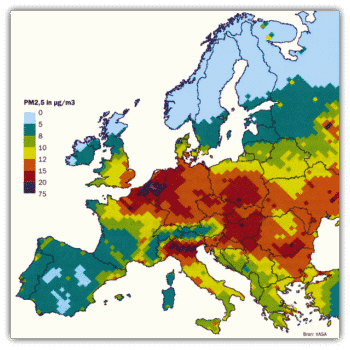
              The image below shows the concentration of fine dust in Europe. The fine dust map of Europe shows that the concentration in Western Europe is one of the highest on the continent. This can be explained by the fact that many combustion processes take place in this area. Especially in traffic and industry. The fine dust map also shows that Scandinavia relatively scores the best in terms of air quality.

              The fine dust map of Europe shows that the areas in red and orange are the most exposed.

              Fine dust map of the Netherlands

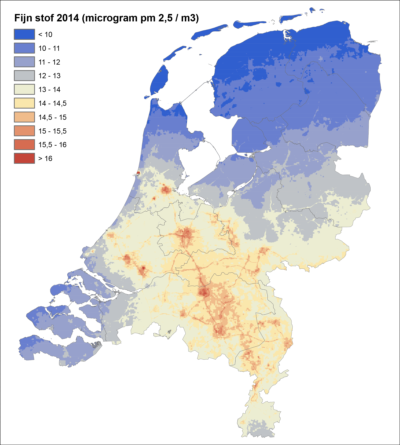
              What about fine dust in the Netherlands in 2019? The fine dust map of the Netherlands shows that the highest concentration occurs around the Randstad and North Brabant. The causes of this are busy highways, large-scale industries and a high population density. In addition, the presence of airports (such as Schiphol) and shipping ports also increase the amount of fine dust in the air.

              The research shows that the risk of a person dying from fine dust increases 7 percent per increase of 5 mcg / m3. “That is the difference between a busy street in the city and a place without the influence of traffic,” says researcher Rob Beelen in the NOS news.

              Do you live in the Randstad, North Brabant or close to a busy highway? Then there is a chance that you live in an area with a lot of air pollution. A solution for this is to use an air purifier. For more information and advice you can consult the fine dust air purifier page.

              The fine dust map below (source: RIVM) clearly shows which areas in the Netherlands are most polluted.

              Fine dust map of the Netherlands: do you want to live somewhere with little air pollution? In that case the best place to be is the Wadden Islands.

              Fine dust in the largest Dutch cities

              What about pollution in large cities such as Amsterdam, The Hague and Rotterdam? In Amsterdam air pollution is still a major problem. The main causes of this are road traffic and the proximity of Schiphol. Rotterdam and The Hague are also affected by air pollution, mainly due to the industry. According to RIVM researcher Paul Fischer, air pollution is not only a major problem in the large cities, but throughout the Netherlands. “In the Netherlands we are dealing with a so-called blanket of air pollution. Especially when it comes to fine dust.”

              The question is: how can we improve the air quality in the Netherlands? The Health Council advocates a thorough approach to diesel vehicles and ammonia emissions from livestock farming. According to the Health Council, these measures yield the most health benefits for the entire Dutch population.

              Would you like to measure the fine dust concentration in your surroundings yourself?

              According to the Dutch Lung fund (Longfonds), the air quality in 1 in 7 houses is insufficient due to fine dust. By measuring fine dust you gain insight into the air quality of your environment. You can also determine the effectiveness of your air purifier. Take a look at our product page about the fine dust meter or read more about the fine dust meter in our extensive advice. Do you have any further questions or would you like some free personal advice? Call +31 20 6464028 or go directly to our range of fine dust meters:

                Contact with AXP


                Smoke extraction in hospitality

                We care about clean air

                solutions for indoor air quality

                Smoke extraction in hospitality

                Buy extraction or an extraction installation for your company in the hospitality industry. As the owner or manager of a hospitality establishment, you want your guests to have a good time. After all, a pleasant scent is very important in your restaurant, café, venue or event space. This ensures that your customers like to come back and go home with a feeling. You also want to strive for a healthy environment and meet all the health and safety conditions. You can find the best extraction devices for the hospitality industry in our collection. We have suitable extraction for every type of location in the hospitality industry. We list a few situations and options below.

                “I have a big venue where a lot of people visit. So I need good extraction. Which extraction device is best for my business? “

                In this case we recommend the EA500 air purifier. This device is mounted on your ceiling or wall. This air purifier takes care of the extraction. It’s an efficient and fast solution for extracting and cleaning the air at your location. The EA500 is ideally suited for a café, conference center, restaurant, hotel or other company. This extraction for the hospitality industry has earned its reputation.

                “The smoking area at my location needs good smoke extraction”

                The EAS1300 is a recirculation system especially made for a smoking area, smoking room or smokey cafe. This extraction device not only provides extraction, but also optimum filtration of the air. This smoke extraction has been successfully tested by TNO and our customers are extremely satisfied with it. Besides smoking areas, this smoke extraction device is also very suitable for restaurants with a smoky open kitchen. Just think of it, no smoothly running café is possible without a proper smoke extraction system.

                More extraction systems and odor solutions

                The extractors we spoke about above are just a small selection from our collection. Browse our range of air purifiers for other alternatives. Do you need extra ambiance in your venue? We have quite some odor solutions in store! You can buy scent diffusers, neutralisers and aroma diffusers from us. The aroma diffuser can produce scents that exactly match the atmosphere and purpose of your business or venue. This way you will attract even more customers!

                Service and installation

                Do you quickly need an extraction device for your company and don’t have the time or know-how to do this yourself. No problem. We are happy to visit you for professional installation. Our technician will place your extraction device in the most suitable place in your company. You will immediately receive an explanation about the operation of the extraction or smoke extraction. You can order a product via our site or make an appointment quickly and easily.

                See below some of our previous clients for smoking areas and smoke extraction!

                  Contact with AXP


                  Fine dust, air quality and absenteeism

                  We care about clean air

                  solutions for indoor air quality

                  Quick to: Product

                  Fine dust, air quality and absenteeism

                  Scientists say there are no safe levels of fine dust. Any concentration of it can be bad for humans. Short and long-term exposure to fine dust is associated with, among other things, health problems like lung diseases (asthma, bronchitis, COPD) and cardiovascular diseases. Ultra-fine particles can enter the bloodstream and also have an effect on the nervous system and brain. The WHO’s international agency for cancer research has labeled fine dust as a carcinogen. (source: Volkskrant 22/08/2017)

                  Fine dust is bad for employees

                  Fine dust is a serious danger to the health of employees. Poor air quality means that employees are less concentrated on their work and therefore less productive.

                  We spend about 25% of our time at work and almost 80% of our life indoors. We breathe about 24,000 times a day. The cleaner the air we breathe, the more comfortable we feel. The healthier we live and the better we perform.

                  According to the WHO (World Health Organization), fine dust causes 7,000,000 deaths per year. According to estimates by the RIVM, poor air quality causes more than 10,000 premature deaths per year in the Netherlands. Scientific studies show that fine dust causes cancer and there is a proven effect on the development of Alzheimer’s.

                  Fine dust, air quality and absenteeism

                  Absenteeism in the Netherlands costs us as a society 11.5 billion euros per year. Hay fever alone costs employers 3 billion euros a year.
                  The numbers don’t lie. Optimising the air quality in the workplace pays off and pays for itself quickly.

                  If we minimise the presence of pollen, allergens and fine dust particles in the air of the workplace, it not only reduces absenteeism. Employees become more productive, can concentrate better and their sense of well-being increases. Besides, it’s much appreciated if the employer makes a visible effort to optimise working conditions.

                  Air purifiers to improve air quality

                  Ventilation systems in buildings claim to block fine dust. However, the filters used in such devices are not as effective as they lead you to believe. Their main purpose is to protect the installations themselves. Fine dust particles smaller than PM10, let alone PM1, or ultra-fine dust PM0.1 are not filtered.

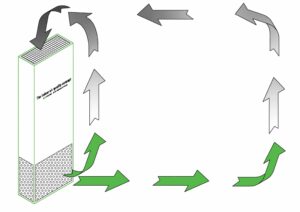
                  It’s a more sustainable solution to optimise air quality with a recirculation system. Such a device is placed in the office itself and recirculates and filters the air on the work floor. Pollen, allergens, viruses and fine dust in the air are dealt with.

                  Extreme Air Products has a worldwide patent for recirculation systems that work on the basis of air displacement. We filter even the smallest dust particles from the air almost imperceptibly and we guarantee optimal air quality on the work floor. Read more about air quality here.

                  The investment often pays for itself within a year. Fewer employees infect each other during the annual recurring flu epidemic. Fewer employees report sick with hay fever complaints. Employees feel less fatigued and more focused. In short, labor productivity increases and absenteeism decreases!

                  Download our white paper for more information about the air quality in workplaces and what you can do to improve it! Click here for more information about our high end air purifiers.

                  See some of our previous clients below:

                  Need advice or more information?

                  Take a look at our product page with air purifiers or read more about the air purifier in our extensive advice. Do you have any further questions or would you like some free personal advice? Call +31 20 6464028 or go directly to our range of air purifiers:

                    Contact with AXP


                    Remove fine dust with 4 effective tips

                    We care about clean air

                    solutions for indoor air quality

                    Quick to: advice and product

                    Remove fine dust with four effective tips | Get rid of dust particles quickly

                    Fine dust is harmful to health. It causes a lot of trouble. This includes potential absenteeism due to illness, but also health complaints. Many people think that the air quality outside is worse than inside. That is a misconception. The EPA has conducted an investigation. This shows that the quality of the indoor air is two to five times worse than the quality of the outdoor air. This is mainly due to lots of chemicals in the air.

                    In this article you can read why fine dust removal is necessary at home, how you do this and how you can measure it.

                    What are the health risks of fine dust in your home?

                    Fine dust particles penetrate deep into the lungs of humans. People are particularly at risk in large cities. Every year, a maximum of 3000 Dutch people die from the effects of (ultra) fine dust. So it’s very important to protect yourself from the risks. Fine dust causes various serious complaints, such as:

                    • heart and vascular disease
                    • high blood pressure
                    • breathing problems
                    • various allergies
                    • increased risk of lung cancer

                    Fortunately, you can protect yourself by removing fine dust from your environment. Below you can read four effective tips that really work.

                    Tip 1: Remove fine dust by using an air purifier

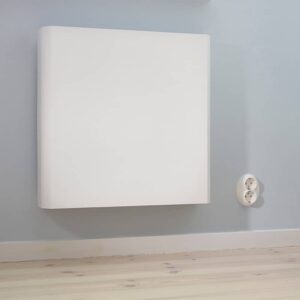
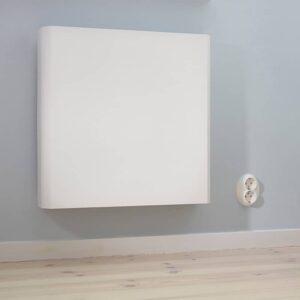
                    This is perhaps the best and fastest way to remove ultra-fine dust. An air purifier ensures that the most harmful substances and particles are removed from the air in your environment. Extreme Air Products offers the EA15, a beautiful air purifier that also has the option to be mounted on the wall. The advantage of this air purifier is that it’s quiet and energy-friendly. So if you are looking for a quick solution for removing fine dust, then using an air purifier is a good option. Experiences of our previous clients also prove this to be true.

                    The EA15 is a good choice for removing fine dust from the air

                    Tip 2: Always leave the extractor hood on while cooking

                    Inspection by the TNO research institute shows that fine dust particles occur in big concentrations, especially when roasting meat and stir-frying vegetables. Research from the World Health Organization (WHO) even concludes that when one fries a hamburger, the amount of dust particles rises to 67 times the permitted standard. A good way to deal with ultrafine dust during cooking is to always switch on the extractor hood. It’s also recommended to leave the extractor on for 20 minutes after cooking. If you don’t have an extractor hood, you can open the window in the kitchen. However, this will remove relatively less harmful dust particles such as fine dust than using an extractor hood. So, if you don’t have an extractor hood yet, it is highly recommended to buy one.

                    Roasting or stir-frying meat is a major emitter of dust particles (Source: Unsplash)

                    Tip 3: Remove fine dust by replacing your wood-burning stove

                    Wood burning is also a prominent source of ultra-fine dust. A fire pit emits a lot of harmful dust particles. According to the website stookwijzer.nu, such a stove emits just as much fine dust as a truck journey of 3,000 kilometers. To avoid this enormous risk of pollution, consider purchasing a pellet stove. This can result in significant savings in emissions. According to the Energy Research Center of the Netherlands (ECM), the PM10 emissions per kilo of fuel are between 6 and 40 grams. That while pellet stoves emit 1 or 2 grams of PM10 per kilo.

                    Tip 4: Stop smoking indoors

                    Removing fine dust is also possible by quitting smoking indoors. It should come as no surprise that cigarette smoke does not improve air quality. Cigarette smoke contains all kinds of dangerous chemicals, including fine dust. These chemicals cause various health problems. Lung cancer is an example of this. If you or your roommate smokes, consider smoking outside. This way you keep the indoor air clean and you also get a breath of fresh air.

                    Bonus tip: measure whether the taken measures are working

                    In this case, I think we can all agree to this: “Measurement is the key to knowledge.” This still applies if you take all of the measures to remove fine dust we spoke of before. With a fine dust meter you know exactly how many fine dust particles are present in the air and whether the air quality in your home is healthy.

                    Would you like free advice or a non-binding offer?

                    With our tailor-made solutions, we can effectively remove all harmful substances such as fine dust. Take a look at our product page with air purifiers or read more about the air purifier in our extensive advice. Do you have any further questions or would you like some free personal advice? Call +31 20 6464028 or go directly to our range of air purifiers:

                      Contact with AXP